Discover how Muslim burials honor the deceased with respect and simplicity—covering washing, shrouding, Janazah prayer, and traditional etiquettes.
Islamic Burial Practices, Steps & Funeral Traditions
In Islam, death is seen as a transition, one that every believer moves through with faith, humility, and dignity. Muslim funeral rites are rooted in following the Prophet Muhammad’s teachings, caring for the deceased, and comforting those left behind. These traditions emphasize simplicity, equality, and respect.
Core Muslim Beliefs
- Muslims believe in life after death, judgment, and reward based on one’s deeds. The funeral rituals reflect this belief. (Funeral Partners)
- Death is treated with urgency; burial usually occurs as quickly as possible, often within 24 hours. (Wikipedia)
- Everyone is equal in death—regardless of wealth or status. The rituals are simple so that every person receives the same care. (NBC)
Key Islamic Burial Rituals
Ghusl (Washing the Body)
- The body is washed by people of the same gender. If no family member is available, trusted community members may perform it. (INELDA)
- It’s washed an odd number of times (commonly three), starting with the head and moving to the rest of the body. Care is taken to maintain modesty by covering private areas. (MUSLIM FUNERAL SERVICES)
- Clean water and soap are used; sometimes perfumed substances like camphor or lotus leaves are included in the final wash. (MUSLIM FUNERAL SERVICES)
Kafan (Shrouding)
- After the body is washed, it is wrapped in plain white cloth called kafan. Men are usually wrapped in three pieces of cloth; women in more layers (often five), depending on tradition. (MUSLIM FUNERAL SERVICES)
- The cloth is unstitched and simple—no gold, silk, or flashy decoration. The emphasis is on dignity and equality. (MUSLIM FUNERAL SERVICES)
- Janazah (Funeral Prayer)
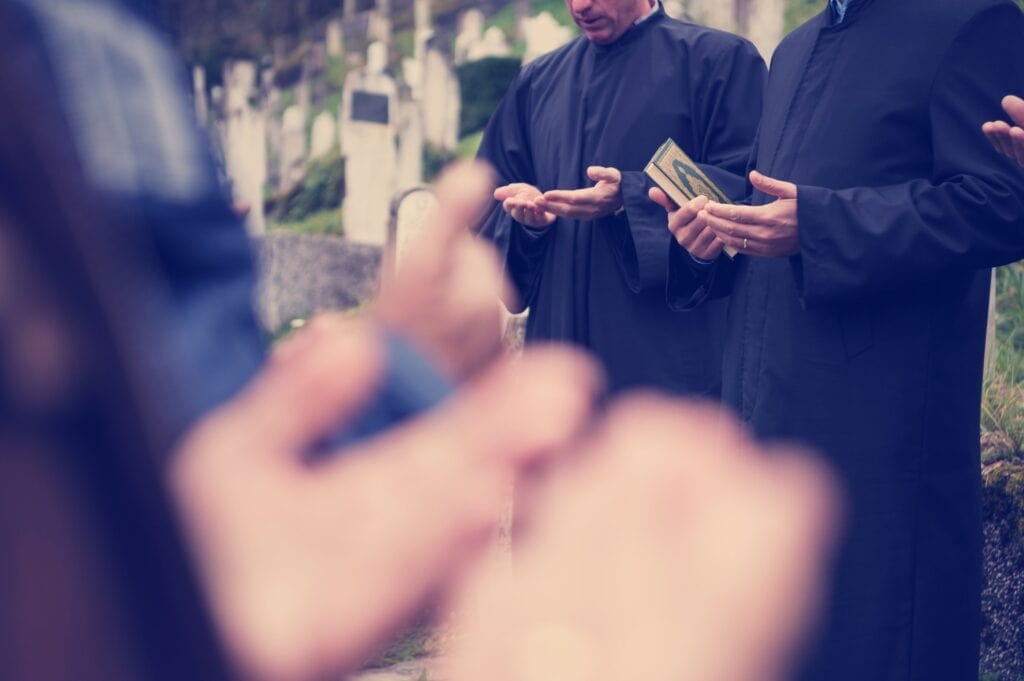
- A gathering—typically in a mosque or prayer space—collectively offers prayers for the deceased. It’s respectful, solemn, and meant to request mercy and forgiveness. (Wikipedia)
- There is no bowing or prostration in Janazah. It involves intention (niyyah), recitations, and supplications. (MUSLIM FUNERAL SERVICES)
Burial (Dafan)
- Burial takes place promptly after the Janazah. The body is placed in the grave on its right side facing Mecca (Qibla). (Wikipedia)
- If allowed by local law, no coffin is used—often the body is placed directly in the ground. If a coffin is used due to regulation, it’s simple and plain. (Wikipedia)
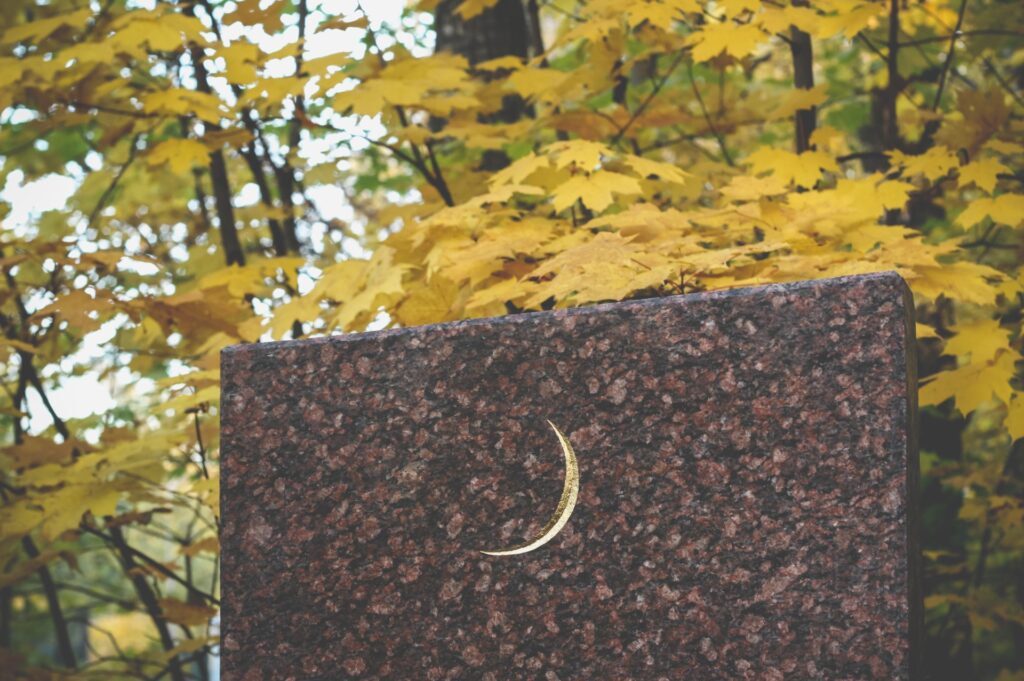
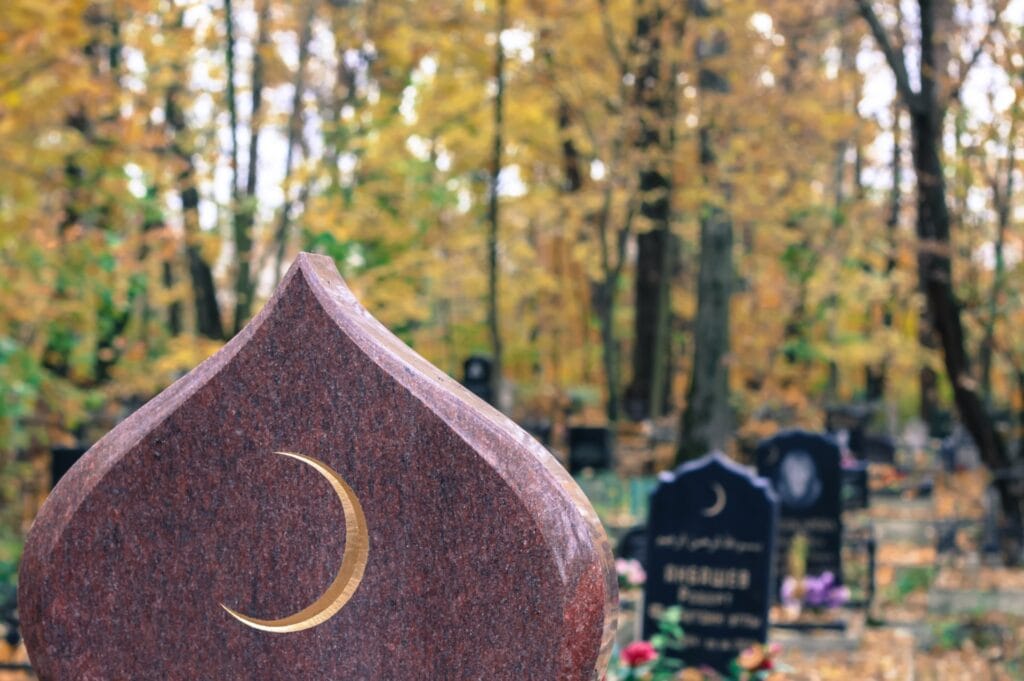
- Attendees traditionally place three handfuls of soil over the grave. The grave itself is kept modest, with minimal markers. (Funeral Partners)
Mourning & Condolences
- Muslims often say “Inna lillahi wa inna ilayhi raji’un” (“Indeed, to Allah we belong and to Him we return”) when someone dies. (Wikipedia)
- There is generally a mourning period of three days. For widows, there is a longer period known as ‘Iddah, lasting four months and ten days. (Wikipedia)
- Acts like giving charity, reciting the Qur’an, and making prayers for the deceased are commonly encouraged. They believe these are beneficial for the deceased’s soul and comforting for the bereaved. (Funeral Partners)
Muslim Funeral Etiquette For Those Attending
- Dress modestly: both men and women should wear simple, clean clothes that show respect. (Funeral Partners)
- If inside a mosque, remove your shoes. Be quiet and respectful during prayers and recitations. (Funeral Partners)
- Non‑Muslims may generally observe but typically do not participate in the Janazah prayer unless invited. (Funeral Partners)
- Offering condolences is done through kind words, visiting the family, or sometimes bringing simple food. Overly loud or dramatic reactions are usually discouraged.
Notes & Variations
- Customs vary by region or culture. Not every Muslim community does all the same things in the same way.
- Legal or local health restrictions can affect timing or some rituals (for example, if burial must be delayed).
- Some communities may have slightly different mourning practices or local traditions layered over the core rites.
Final Thoughts
Muslim burial practices are built on care, respect, and the belief that life continues in some form after death. The rituals—washing, shrouding, prayer, and burial—are all about dignity, honoring the person, and comforting those left behind. When attending or helping with a Muslim funeral, kindness, humility, and following local customs are the best ways to show respect.