Skip the funeral home. Memorial services let you honor loved ones on your timeline, in any location. Get the complete planning guide with real costs.
When someone dies, you don’t have to follow the traditional funeral home playbook. Memorial services have grown increasingly popular because they offer something traditional funerals often don’t: flexibility.
Because a memorial service is a ceremony to honor someone who’s died without the body present, you can hold a memorial service weeks or even months after a loved one has passed. It can be held in any location that feels right (i.e. home, community center, nature). There’s no pressure to rush through decisions during grief, no pressure to follow rigid funeral home protocols, and no requirement to spend thousands on services that don’t feel authentic to you.
Whether you’re planning ahead or arranging care after a recent loss, understanding what a memorial service is—and how it differs from a funeral—can help you create a meaningful goodbye so you can start healing.
Did you know? Everis offers Complete Cremation Arrangements that includes everything from carbon-neutral cremation to natural memorial with clear, all-inclusive pricing. Nature memorials return ashes to the earth in a meaningful nature-based ceremony in a shared spreading grove or a dedicated Memorial Tree.
Quick Navigation:
Memorial service vs. funeral
When are memorial services held?
Where can you hold a memorial service?
What happens at a memorial service?
How to plan a memorial service
Creating a living memorial
Memorial service vs. funeral: understanding the difference
The main difference is simple: at a funeral, the body is present. At a memorial service, it’s not.
Traditional funerals typically happen within 3-7 days of death. The body is embalmed and prepared for viewing, placed in a casket, and the service revolves around that physical presence. Families often feel rushed to make decisions quickly—choosing a casket, arranging a viewing, coordinating with funeral homes on tight timelines.
Memorial services happen after cremation or burial. They might take place weeks or months later, or whenever feels right for your family. Some families hold intimate gatherings at home. Others plan larger celebrations of life when friends and family can travel. The remains might be present in an urn or spread during the ceremonyly—there’s no right way to do it.
Why more families choose memorial services
With a memorial service, you have time to think clearly, coordinate with family members who need to travel, and plan a ceremony that reflects your loved one’s values. A traditional funeral might cost $8,000-$12,000 with burial, while cremation followed by a memorial service typically costs less—money many families would rather spend on gathering together or creating lasting tribute that lives on.
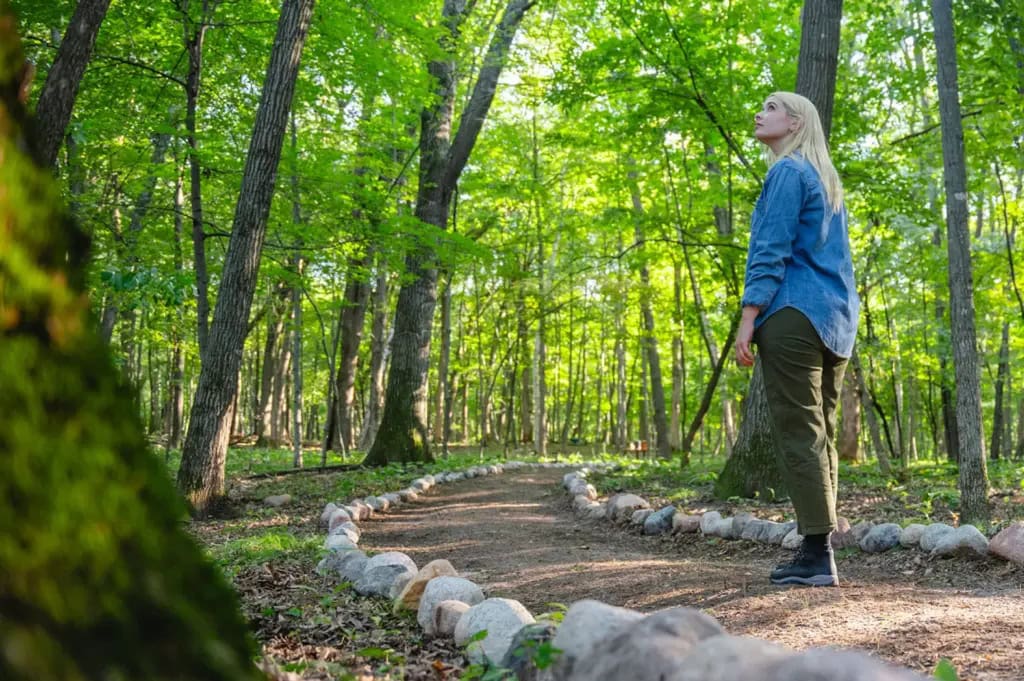
Memorial services also feel less rigid. You’re not locked into a funeral home chapel or standard format. You can hold the ceremony in a beautiful forest surrounded by nature, a community center, or your own backyard. You can play their favorite music, invite people to share stories, and skip anything that doesn’t feel authentic.
For families who choose cremation, memorial services offer the time and space to grieve, then celebrate your loved one’s life when you’re ready.
Let healing begin: Everis’ Nature Memorials offer a beautiful ceremony to lay your loved one’s ashes to rest, allowing your grief to settle and begin your healing journey. It provides an uplifting experience, unlike somber funerals and cemeteries. Explore Nature Memorials
When are memorial services held?
There’s no rule about timing. Most memorial services happen 2-6 weeks after death, but some families wait longer—and that’s completely okay.
Common timelines:
- 2-3 weeks: Gives immediate family time to handle arrangements and notify extended family and friends
- 4-6 weeks: Allows out-of-town relatives to make travel plans and gives you more time to plan
- 2-3 months: Common when coordinating around holidays, waiting for better weather, or planning larger gatherings
- Special dates: Some families wait for a birthday, holiday, or anniversary that held meaning
You might choose timing based on when family can gather, nice weather, venue availability, or simply when you feel emotionally ready to host people. Unlike funerals, there’s no pressure to rush. Grief doesn’t follow a schedule, and neither should memorials.
Some families hold multiple small gatherings instead of one large service—an intimate ceremony for close family, then a larger celebration of life a few weeks later. Others plan both a local service and a second gathering in another destination where their loved one’s ashes will be spread. The right time is whatever works for your family.
Flexibility with Everis: Everis Nature Memorials can be held immediately after a passing or scheduled for later—weeks, months, or even years—allowing loved ones to gather when they’re ready. Find out more
Where can you hold a memorial service?
Memorial services can happen anywhere that feels meaningful to you. Without the logistics of transporting a body, your options open up completely.
Popular locations:
- Private homes: Intimate, personal, and cost-free
- Parks and beaches: Beautiful outdoor settings for celebration of life gatherings
- Community centers: Affordable spaces that can accommodate larger groups
- Restaurants or event venues: Combines ceremony with a meal or reception
- Memorial Forest: A protected, natural sanctuary where families can return for generations
Virtual and hybrid options have become common too. If family is scattered across the country, you can livestream the service so everyone can participate. Some families record the ceremony to share with those who couldn’t attend.
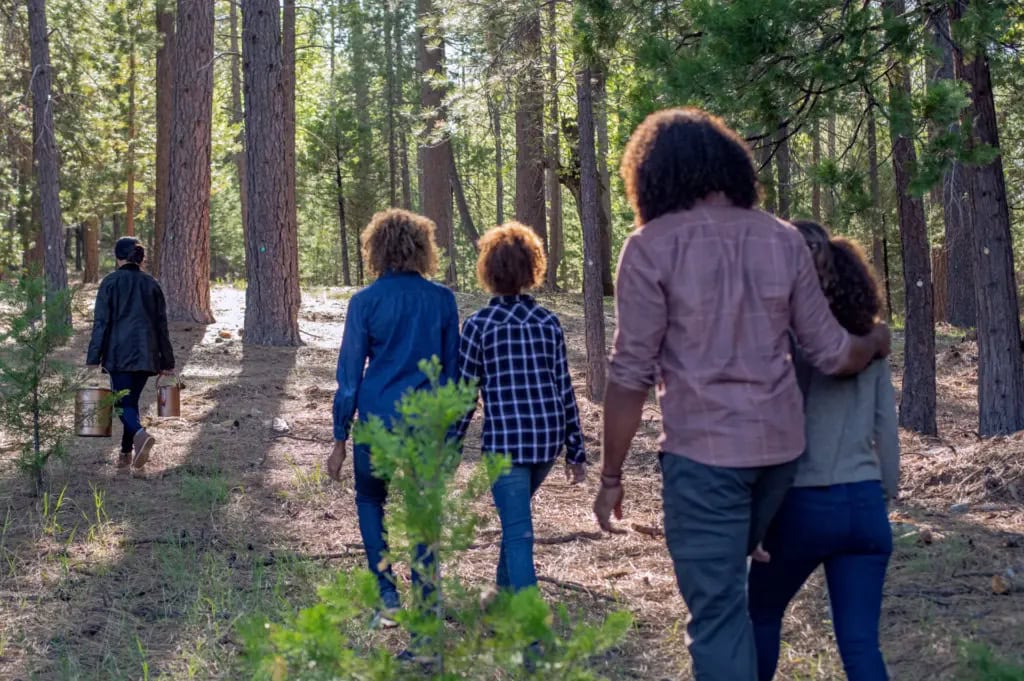
Memorial Services in Nature: With Everis, your family can hold a memorial service in one of our nine protected Memorial Forests located coast to coast. Our services include self-led Natural Memorial ceremony in a shared Spreading Grove or a guided Natural Memorial ceremony at a private Memorial Tree. Learn more about Everis Nature Memorials

What happens at a memorial service?
There’s no script. That’s the beauty of memorial services—you design them around the person you’re honoring, not around tradition or funeral home requirements.
Common elements many families include:
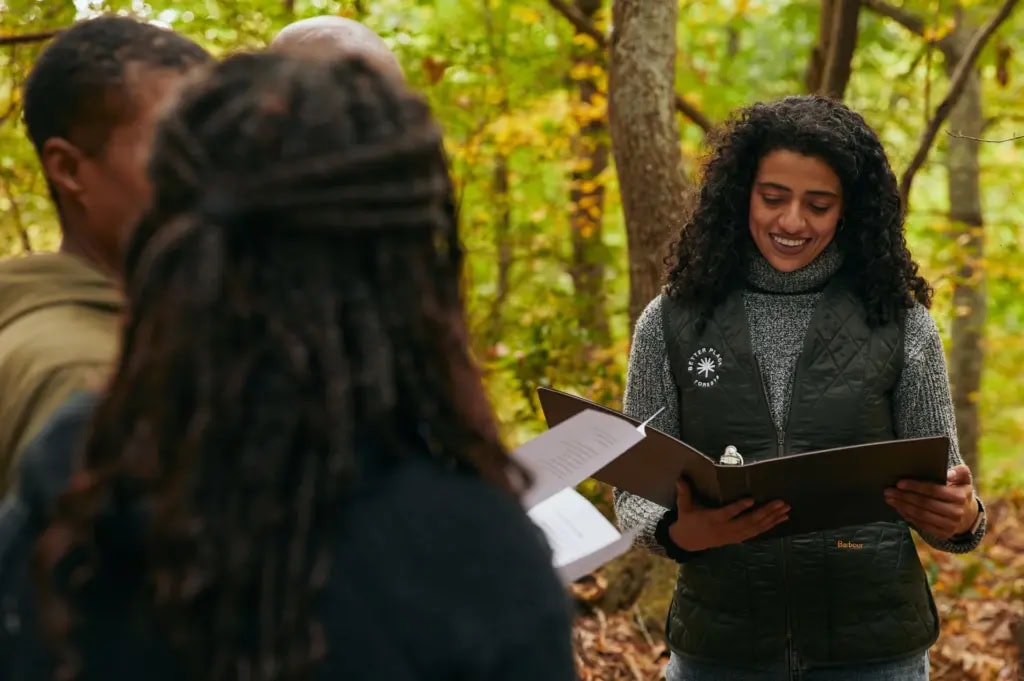
Officiant: Some people prefer having an officiant to guide the ceremony and take the pressure off—whether that’s a spiritual advisor, celebrant, or a close friend who knew your loved one well.
Eulogy: This might be one person speaking for 10 minutes or five people sharing shorter memories. Some families invite anyone who wants to speak, while others plan specific speakers.
Music: Maybe it’s your dad’s favorite jazz playlist, a live performance by musician friends, or hymns that bring comfort. You can have one song or ten. You can play recordings or have live music.
Military honors: If your loved one served in the military, you can incorporate traditions like playing Taps, a flag-folding ceremony, or arranging for an honor guard through your local veterans’ organization.
Religious or spiritual rituals: Just because you aren’t holding a service in a church doesn’t mean you can’t include prayers, hymns, scripture readings, or other faith traditions that bring comfort and meaning to your family.
Urn display: An urn display at a funeral does more than hold the remains of a loved one; it serves as a symbolic reminder of their spirit and the impact of their departure.
Photos and videos: A slideshow of life moments, a video montage, or simply printed photos displayed at the ceremony. People love seeing faces and remembering joyful moments together.
Readings: If you’re having trouble writing a eulogy, consider reading poetry, religious texts, or a passage from a loved one’s favorite book.
Sharing: It’s okay too to allow open sharing time where guests can stand and share memories. This can be the most powerful part—hearing stories you’ve never heard before, seeing your loved one through other people’s eyes.
Some memorial services are 30 minutes of simple, quiet reflection. Others become longer celebrations with food, storytelling and ash spreading. Most fall somewhere between 45-90 minutes. You decide what feels right.
Everis ash spreading ceremony: To provide your family with privacy and solitude, at Everis, we close your chosen Memorial Forest to all visitors for two hours during each Nature Memorial ceremony, weather permitting. This gives you time to return your loved one’s ashes to the earth either in a Spreading Grove or at Memorial Tree, celebrate the life of your loved one, and explore the forest completely undisturbed.
How to plan a memorial service
Planning a memorial service is more straightforward than most people expect. Without the time pressure of traditional funerals, you can think clearly and make choices that feel right.
Start with timing and location. Pick a date that gives you enough time to plan. Consider when out-of-town family can travel and whether your preferred venue is available. If you’re thinking about an outdoor location, check the weather forecast and have a backup plan.
Create your guest list. Memorial services can be intimate gatherings or larger celebrations. The size determines your venue choice and whether you’ll need formal invitations or can spread the word through phone calls and email. Some families keep services small and private, then host a larger open house or celebration of life later.
Decide if you want an officiant or MC. Someone needs to guide the flow—welcoming people, introducing speakers, managing timing. This could be a celebrant, clergy member, close friend, or family member. Choose someone comfortable speaking publicly who knew your loved one well.
Plan program elements. What do you want to include? Opening words, music, readings, eulogies, open sharing time, closing remarks? Write it down in order. Keep it simple—you don’t need elaborate programs. A one-page outline works fine, or nothing written at all if it’s a casual gathering.
Handle logistics. If you’re using a park or beach, check if you need permits. Arrange any sound equipment if you’re playing music or have speakers. Think through practical details like parking, seating, and accessibility for older guests.
Send invitations. For formal services, send invitations 2-3 weeks in advance. For casual gatherings, emails or phone calls work fine. Include location, date, time, parking information, and whether there will be a reception afterward. Mention if you’d prefer donations to a cause instead of flowers.
Plan with Everis: When you arrange cremation with Everis, memorial service planning is included in your package—whether you’re planning ahead or arranging for an immediate need. Our team helps families create meaningful ceremonies, practical guidance without pressure. Learn more about Everis Complete Cremation Arrangements
Creating a living memorial
More families want something beyond traditional memorials—a permanent, meaningful place to remember and visit that also gives back to the earth.
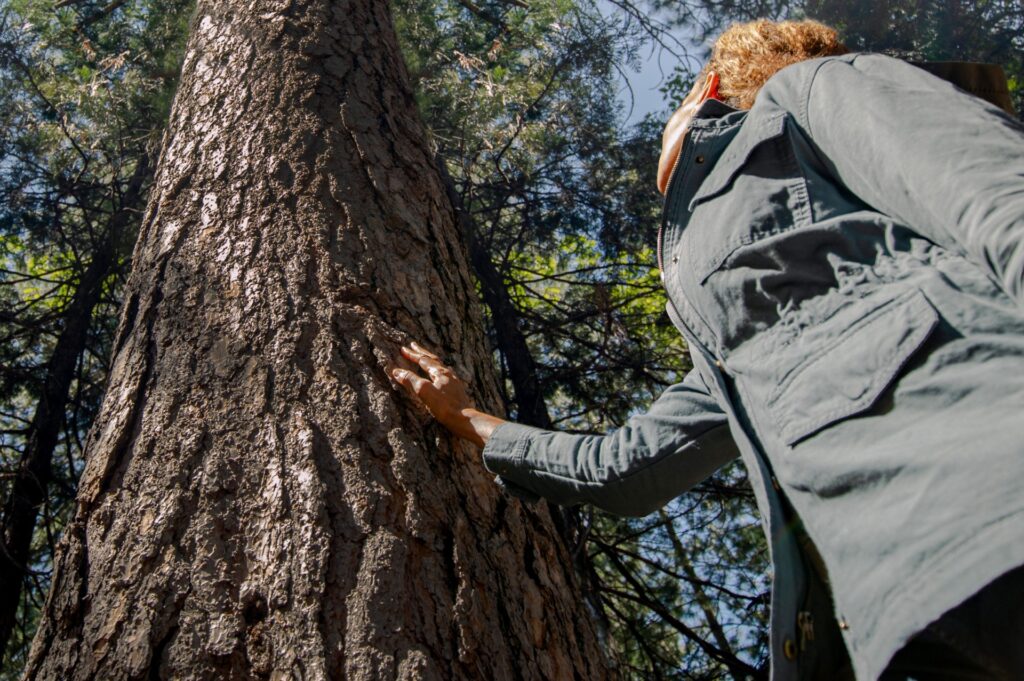
Memorial trees in protected forests offer exactly that: a living legacy in a beautiful natural setting you can return to year after year. Instead of ashes sitting in an urn on a shelf or scattered somewhere you can never visit again, a Memorial Tree becomes a living tribute in a forest that’s protected forever. It’s ideal for nature lovers, environmentalists, and anyone drawn to the idea of a memorial that grows stronger over time.
Memorial Trees vs. DIY tree burials
With Memorial Trees, professional soil mixing ensures ashes properly nourish the forest without harming trees. Conservation easements protect the land forever, and expert foresters maintain ecosystem health.
DIY tree burials sound appealing, but cremation ashes can actually damage or kill trees without proper pH neutralization and soil preparation.
Memorial Trees vs. tree burial pods
Memorial Trees are mature, established trees. When you spread ashes at your Memorial Tree, you can rest assured the tree will thrive for generations.
Tree burial pods involve planting a new sapling with cremated remains. A young tree may not take root or survive its vulnerable early years—meaning the memorial itself could fail.
Everis Memorial Trees: An Everis Memorial Tree gives you confidence that your tribute will last—professionally cared for, legally protected, and growing stronger every year. It’s a living memorial you can trust will be there for generations to come. Best of all you can add people and pets to your Memorial Tree over time. Explore Memorial Trees
Frequently asked questions
How much does a memorial service cost?
Memorial services can range from free to several thousand dollars depending on your choices. If you hold a service at home or in a public park, your costs might be the event permit, food and printed programs. Renting a venue like a community center typically runs $200-$800. Hiring a celebrant costs $300-$500. Many families spend $500-$1,500 total on memorial services by keeping things simple and personal. Traditional funeral homes may charge venue fees of $500-$2,000 just to use their space, which is why many families choose to hold services elsewhere.
When you choose Everis Complete Cremation Arrangements your package includes transportation, carbon-neutral cremation, paperwork (including death certificate copies), interactive obituary, a nature Memorial ceremony, and a legal resting place in nature in a Spreading Grove in a protected Memorial Forest, plus estate settlement assistance and ongoing grief support for family. Find out more
Do I need a funeral director for a memorial service?
No. Funeral directors are required for handling bodies, but once cremation has happened, you can plan and hold a memorial service entirely on your own. You might choose to work with a funeral home for convenience, or hire an independent celebrant to officiate, but neither is required by law. Many families successfully plan meaningful memorial services without funeral home involvement.
At Everis, our compassionate Guides are with you every step to help you plan a meaningful Nature Memorial ceremony. Find out more
Can I have a memorial service without a body or ashes present?
Absolutely. Memorial services are about gathering to remember, not about the physical remains. Ashes might already be scattered, buried, or kept privately by family. Some memorial services happen months or even years after a death.
The ceremony may even be combined with an ash scattering. At Everis, our Nature Memorial ceremonies include a legal ash spreading in a shared Spreading Grove or at a private Memorial Tree. Find out more
How long should I wait to have a memorial service?
There’s no rule. Most memorial services happen 2-6 weeks after death, but you can wait longer if that works better for your family. Some people hold services months later to align with a meaningful date. Others wait until travel is easier or the weather improves. The right timing is whatever feels right for you and allows the people who matter to attend.
What should I wear to a memorial service?
It depends on what the family requests. Traditional memorial services might call for dark, formal clothing, but many modern memorial services are more casual. Some families specifically request bright colors instead of black. Others say “come as you are.” If the invitation doesn’t specify, business casual is usually safe, or ask the family directly. The trend is moving toward celebrating life rather than mourning death, which often means less formal dress.
For more information, please read our guide covering What to wear to a Memorial Service
Is a memorial service right for you?
Memorial services give you the freedom to honor someone on your timeline, in your way. Unlike traditional funerals with their rigid timelines and institutional settings, memorial services let you focus on what actually matters—gathering with people who loved this person, sharing stories, and creating a tribute that feels true to their life.
Cremation opens up these possibilities. You’re not locked into funeral home schedules, expensive packages, or someone else’s idea of how grief should look. You can plan something meaningful, take time to do it right, and spend your resources on bringing people together rather than on caskets and embalming services you don’t need.
If you’re considering cremation and want the freedom to plan a memorial service that truly reflects your loved one, Everis provides complete arrangements starting at $4,150—with transparent pricing, compassionate guidance, Nature Memoria, and a resting place in nature included. No hidden fees, no upselling, no pressure. Just straightforward cremation services you can arrange online, plus support for creating the kind of memorial that honors the person you love. Find out more