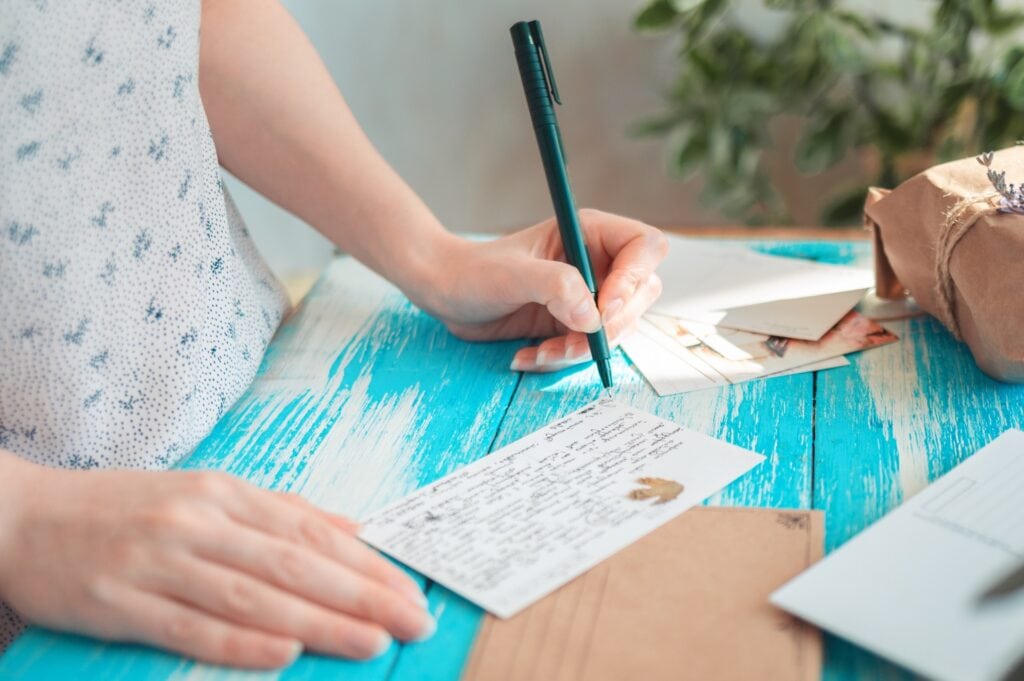
Addressing a sympathy card can feel delicate. This guide offers clear etiquette, real examples, and envelope tips for families, couples, coworkers, and special cases—so your message arrives with care.
Spiritual Words of Encouragement For a Sick Person, Parent, Friend, Family
When grief arrives, even addressing an envelope can feel delicate. Should you write “The Family of…” or use full names? Should it go to one person or the household? Here’s a caring, easy-to-follow guide to make sure your card arrives exactly where—and how—it should.
Why the Envelope Matters
- Send it within two weeks. If it’s later, don’t worry—sympathy is always welcome.
- The envelope sets the tone. A clearly addressed card shows respect even before it’s opened.
Quick Envelope Basics
- Handwrite it, using blue or black ink if you can.
- Use full, proper names and titles—no nicknames on the outside.
- Include your return address—they may want to send a thank-you note.
- For a home, you can address it to one person plus “and family.”
What to Write on the Envelope of a Sympathy Card: Practical Examples
1. Closest next of kin
If the surviving spouse or child:
Envelope:
Ms. Emily Carter
1420 Juniper Street
Denver, CO 80203
Inside:
Dear Emily,
2. Spouse or partner and family
Envelope:
Mr. Daniel Ruiz and Family
33 Ocean View Drive
Pacifica, CA 94044
Inside:
Dear Daniel and family,
3. Family you know well (different last names)
Envelope:
Ms. Claire Bennett
Mr. Jordan Lee
518 Maple Avenue
Portland, OR 97210
Inside:
Dear Claire and Jordan,
4. Married couple, same last name
Envelope options:
Emma and Jacob Morales
—or—
Mr. and Mrs. Jacob Morales
5. Widowed spouse
Envelope:
Mrs. Ana Delgado
Inside:
Dear Ana,
6. Divorced parents
Envelope:
Ms. Priya Kapoor
Mr. Adam Stone
(And send individual cards if possible.)
7. Same-sex couples
Envelope:
Mr. Avery Collins and Mr. Noah Green
8. Family with kids
Envelope:
The Thompson Family
Inside:
Dear Maria, Luis, Mateo, and Elena,
9. When you don’t know names
Envelope:
The Family of Michael J. Hart
74 Brookside Lane
Austin, TX 78704
Inside:
Dear Hart family,
10. Titles and professionals
Envelope:
Dr. Olivia Park and Mr. Daniel Park (or)
Captain Thomas Willis, U.S. Navy (Ret.)
11. Workplace card
Envelope:
Ms. Keisha Monroe
c/o Marketing Department
1700 Pine Street
Philadelphia, PA 19103
Inside:
Dear Keisha,
12. You knew the deceased more
Envelope:
Mr. Samuel Ortiz
Inside:
Dear Samuel, I’ll always remember working with Javier—he taught me so much…

Sample Envelope Templates
Single recipient:
[Title] [First Last]
[Street Address]
[City, State ZIP]
Couple (same last name):
[First Name] and [First Name] [Last Name]
[Address]
[City, State ZIP]
Couple (different names):
[Title] [Name]
[Title] [Name]
[Address]
[City, State ZIP]
Family:
The [Last Name] Family
[Address]
[City, State ZIP]
Family of deceased:
The Family of [Full Name]
[Address]
[City, State ZIP]
With title:
[Title] [First Last]
[Address]
[City, State ZIP]
Greeting Starters Inside: How to Address a Condolence Card to a Family, Loved One
- Dear [Name],
- Dear [Name] and family,
- Dear [Last Name] family,
- To the family of [Name],
- Dear [Title Last Name],
Then share your heartfelt message.
Special Situations
You don’t know the name:
Use “The [Last Name] Family.”
Or say, “Dear [First Name] and family.”
Work address only:
Use “c/o” (care of) before company info.
International mail:
Check address format for that country and expect delays.
Religious leaders/church-wide cards:
Use their title + congregation name, e.g.,
Rabbi David Klein
Congregation Beth Shalom
Polishing Touches
- Write clearly and neatly.
- Use a simple, respectful stamp.
- Hide any gift card or check inside the card.
- If using reusable stationery: address the outer envelope formally; the inner can be more casual.
Common Mistakes to Avoid
- Nicknames or informal names on the envelope.
- Only addressing one parent in a shared home.
- Generic lines like “Current Resident.”
- Overstuffing the message with clichés like “Everything happens for a reason.”

Quick Questions
Is “The Family of [Name]” impersonal?
Not at all—it’s respectful when you don’t know all recipients. Personalize inside.
Should I ever address a card to the deceased?
No—send to the living. You can mention the deceased in the message.
One card for different households?
Best to send separate cards if households differ.
Being late with the card?
Send it anyway. It’s never too late to show you care.
Should kids be listed?
Not on the envelope. You can name them inside if it feels right.
A Kind Closing
The envelope isn’t just a placeholder—it’s the first gift of comfort. Using care in who you address, how you write it, and how you sign off sends a little more kindness before your words are even read.
For etiquette details, organizations like Emily Post and the Hospice Foundation of America offer thoughtful advice on tone and timing.