Cremation is the most popular end-of-life option, but how does cremation work, and what options are available? This guide explains everything you need to know.
Deciding between burial and cremation may not be the most exciting decision you’ll make, but it’s an important one. Whether you actively make the choice or leave it undecided, it’s a choice that will be made—by you or someone else. Cremation is the most popular choice in the United States due to its lower price point, flexibility, and smaller environmental impact.
But how does cremation work, and what options are available? This guide explains everything you need to know about the cremation process, the types of cremation available, and why it’s an increasingly popular choice. From traditional flame-based cremation to eco-friendly alternatives like alkaline hydrolysis, this blog will walk you through the steps, options, and considerations to help you make an informed decision.
Jump to:
- How Cremation Works: Overview
- Why Do People Choose Cremation?
- How Does Cremation Work? The Process in 5 Steps
- Types of Cremation
- FAQs
- Find Your Final Resting Place
How Cremation Works (Overview)
Cremation (also called flame cremation) is a method of disposition that uses intense heat in a cremation chamber to reduce the body to bone fragments, which are processed into a fine, powder-like substance known as ashes. Cremation ashes can be divided among the family, scattered in a meaningful location, placed in a Memorial Forest, or transformed into keepsakes or art.
Alkaline hydrolysis, also known as water cremation, is a more environmentally conscious alternative to traditional cremation. This process uses a combination of water, heat, and an alkaline solution to accelerate natural decomposition, reducing the body to bone fragments. Alkaline hydrolysis uses less energy and doesn’t emit harmful greenhouse gasses, making it an appealing choice for those seeking a more sustainable end-of-life option.
Why Do People Choose Cremation?
63.4% of Americans choose cremation over burial, making it the most popular end-of-life option in the United States. Cremation is more affordable than traditional burial and allows for flexibility when planning a memorial service and final resting place. Cremation also uses less energy and land space, which makes it more environmentally friendly. People who opt for cremation also like the various options for ashes to be memorialized in their honor.
How Does Cremation Work? The Process in 5 Steps
The cremation process involves several steps to ensure proper care, compliance, and respect for the deceased and their family. Here’s an overview of the process:
1. Intake and Identification
When a body arrives at a crematory it must undergo thorough intake and identification procedures before the cremation begins. This includes confirming the deceased’s identity and completing all necessary legal paperwork (a signed cremation authorization form) to comply with local regulations. Before a body can be cremated a death certificate must be signed by a doctor or coroner.
Every state has slightly different rules and regulations when it comes to caring for the dead. For example, some states require the body to be embalmed. There are also varying rules about how and when a death certificate needs to be signed. Find your state to learn about your local rules and restrictions.
2. Preparation
Once necessary intake and authorization procedures have been completed, it’s time to prepare the body. Any medical devices, implants, or metal objects, such as pacemakers or dental work, are removed to avoid risks. If you choose embalming, that process occurs during the preparation phase.
Families are presented with the option to choose an appropriate cremation combustible container or tray, typically made from combustible materials like wood or cardboard, to house the body during the process.
3. Cremation
The body, in its container or tray, is placed into the cremation chamber, often called a retort. The chamber is preheated to temperatures between 1,400 and 2,000 degrees Fahrenheit (760–1,093 degrees Celsius). Modern cremation chambers are equipped with advanced controls to maintain efficiency and precision.
Inside the chamber, intense heat vaporizes soft tissues, leaving behind only bone fragments. The entire process usually takes 1 to 3 hours, depending on the body composition and the type of cremation equipment used. At completion, only bone fragments remain.
4. Processing
Once the chamber cools to a safe temperature, the remaining bone fragments are carefully collected. If there were any metal objects, such as dental fillings, implants, or artificial joints, those are separated from the remains using magnets and hand tools. The fragments are then processed into a fine, powder-like substance known as ashes or cremains. This step ensures the remains are uniform and easy to handle for final disposition.
5. Final Disposition
The cremated remains are placed into an urn or container of the family’s choice. Options range from simple, functional urns to elaborate keepsakes. Each urn is labeled with the deceased’s name and other identifying information.
Families can then decide how they wish to honor their loved one. They may choose the urn as the final resting place, or scatter the ashes, place them in a Memorial Forest, bury them, or place them in a columbarium.
Feeling Overwhelmed? When you preplan or arrange complete cremation with Everis, every detail is handled including transportation, cremation, paperwork, obituary, memorial ceremony and resting place in nature. Find out more

Types of Cremation
There are three primary types of cremation, each offering unique options based on preferences, cost, and environmental considerations:
- Traditional Flame Cremation: Traditional cremation method using heat and flame to reduce the body to ashes.
- Soil Cremation (Natural Organic Reduction or NOR): Natural cremation process that gently transforms the body into nutrient-rich soil.
- Water Cremation: An eco-friendly alternative that uses water, heat, and an alkaline solution to break down the body.
Did you know? Every cremation with Everis is carbon-neutral, honoring both your loved one and the planet. Choose traditional flame cremation, soil cremation, or water cremation. Your values, your choice, your impact. Learn more
FAQs
What happens in a crematory when a body is brought in?
When a body is brought into a crematory, it must undergo an identification process to ensure proper handling. This includes identification, receiving the death certificate, and completing all necessary legal paperwork to comply with local regulations. Once the identification process is complete the body is prepared and then ultimately cremated.
What does a funeral director do in cremation?
A funeral director typically helps the family complete paperwork, coordinate permits, transport the deceased, and communicate with the crematory about timing, identification, and any special requests. Everis takes on this role in our Complete Cremation Services package.
Are people cremated with or without their clothes on?
People are typically cremated in the clothing they were wearing when they died. Some families choose a specific outfit for the cremation. Depending on cultural or religious traditions, some people may choose to be wrapped in a cremation shroud without clothing. Jewelry is normally removed and given to the family.
Can medical devices or implants affect the cremation process?
Yes. Battery-powered implants (especially pacemakers and defibrillators/ICDs) can be hazardous under high heat and are typically removed before cremation. Other metal implants (like joint replacements) usually don’t prevent cremation, but they may be separated from the remains afterward. If the person had any implanted device (including rare radioactive implants), tell the funeral director or crematory during paperwork.
What is removed from a body before cremation?
Anything that would react negatively with high heat will be removed before cremation. This includes pacemakers, jewelry, and prosthetics. Medical devices will be disposed of, and jewelry will be given to the family unless otherwise stated.
If a body is embalmed and in a casket, how is it cremated?
In a traditional cremation, it’s normal for the body to be embalmed and placed in a casket for the funeral ceremony. After the ceremony, the casket is taken to the crematorium, and the cremation is done with the casket used as the container. Funeral homes have cremation-friendly trays or containers made of combustible materials available. Any metals are removed from the casket before the cremation. It’s important to remember that cremation after embalming will emit chemicals, so there’s a higher carbon footprint than with a direct cremation.
How are ashes collected and handled after cremation?
After the chamber cools, the crematory carefully sweeps the bone fragments into a cooling tray, checks identification, and moves the fragments to a processor. Metal is separated (often with magnets and hand tools). The processed cremated remains are placed in a bag and then into an urn or temporary container, labeled for identification before being returned to the family.
How long does a cremation take?
The actual cremation takes about 3-4 hours, but the full process can take 4-15 business days. Once the crematory receives a body the crematory must receive a signed death certificate from the doctor. This can take a few days to be processed. Once signed, the crematory can begin the cremation process. Afterward, the cremated remains must cool and be processed for pickup or shipping to the deceased’s next of kin.
What do they do with the bones after cremation?
Bones remain after the cremation process. They are then processed to create a powder – those are the ashes that most are familiar with.
Why does it take so long to get ashes back after cremation?
Crematories often have waiting periods due to legal requirements and scheduling, which can extend the timeline. The full process should take between 4-15 business days from intake of the body.
Find Your Final Resting Place
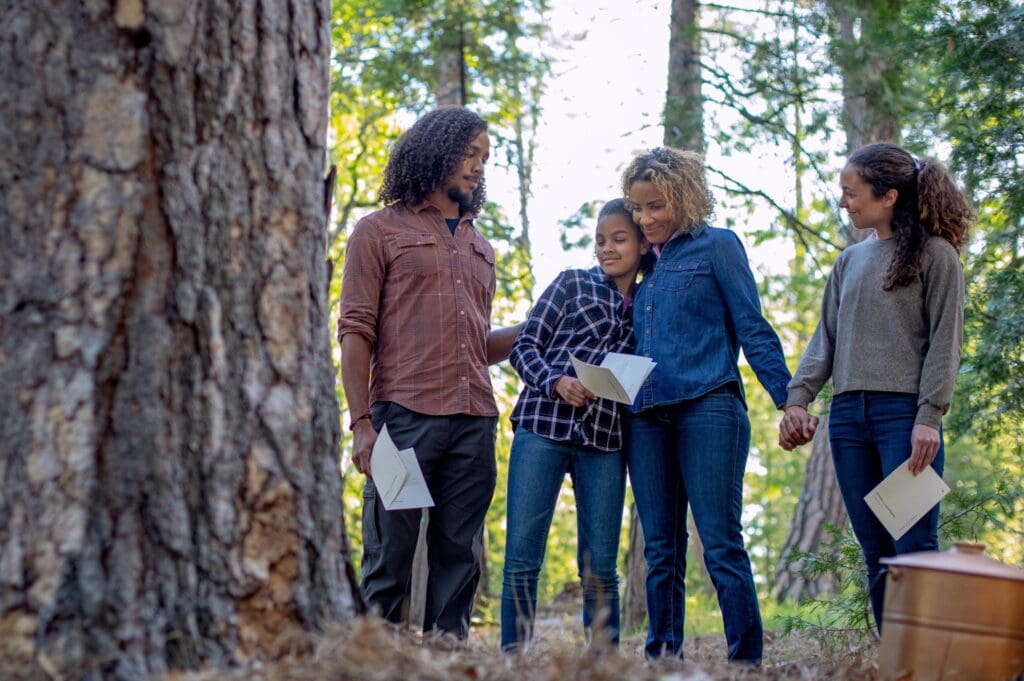
After cremation, families need a place to remember. With Everis, ashes find a permanent home in a protected Memorial Forest—not on a mantle, not scattered without a place to return, not in a formal and somber setting.
Memorial Forests honor life differently: a living place that changes and grows with the seasons. Your resting place becomes somewhere families gather across generations, where partners can be together, and where love has a natural home. Talk to a Guide to find out more.